
PRAIRIELAND GODDAMN
"What kind of people are not against fascism?"
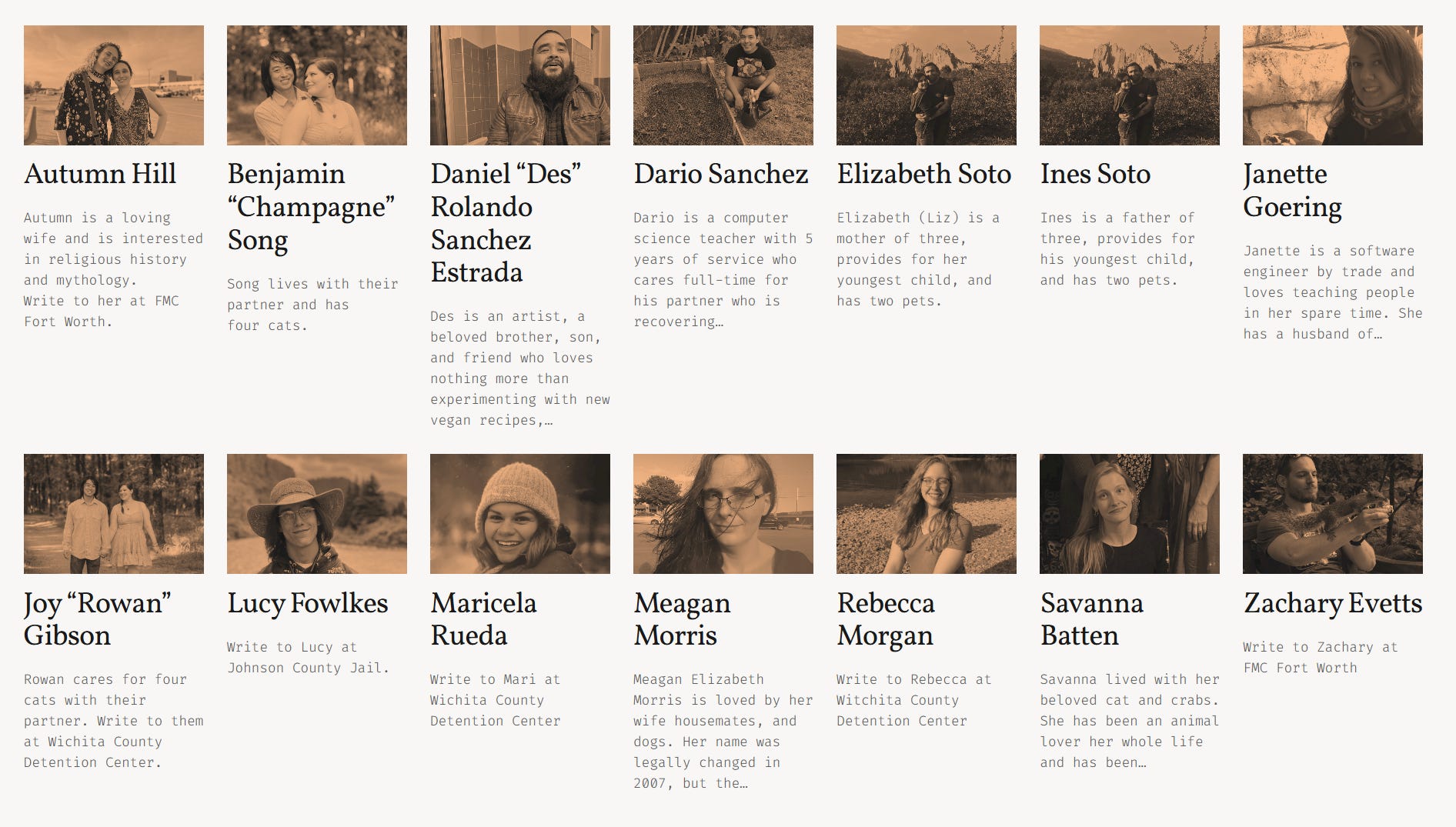
Screenshot of Prarieland defendants from the DFW Support Committee’s website
“I don’t fear for myself. I fear for all of you. What will you do in this time of great failures and great injustices? What will you do? How will you help each other? How will you help yourselves?”
—Benjamin “Champagne” Song, in an allocution at his sentencing hearing held before federal judge Reed O’Connor in the Northern District of Texas (6/23/2026) at which he received a total of 100 years in federal prison
PART I: YOU WANT TO LOOK AWAY
You want to look away because they must have done something.
You want to look away because people don’t just get sentenced to 50 years in federal prison for organizing ICE protests on an encrypted messaging app. They don’t get that kind of time just for showing up to those protests while dressed in black. And no one could ever receive 70 years for harmlessly shooting off fireworks that they bought at a roadside stand at a safe distance from a government building, let alone 50 years for watching them go off and then trying to clean up the debris like any responsible person would.
You want to look away because no one could possibly get three decades of federal prison time just for moving a box of DIY publications to a friend’s house.
There was something else going on here. There had to be.
You want to look away because the federal government labeled this collection of people from overlapping leftist/anarchist organizing circles the “North Texas Antifa Cell,” and even if this was never a thing that they called themselves there must have been a reason that the government called them that.
You want to look away because we heard that some of them brought guns to a protest—and sure, yes, they were all legally purchased and registered but didn’t someone take a shot at a cop? And we almost want to look away even more once we find out that no one took a shot directly at anyone,1 and that the officer’s injuries were so incidental that his medical records weren’t even introduced at trial.
I get it. I really do. I wanted to look away too.
But then the more you look at the legal nightmare of the Prairieland prosecutions and what our government has done to these good people—and why2—the more you will want to look away for no better reason than that you are on the train to work and feeling a messy cry coming on.
It’s time to look. Take all the time you need, but if you’re here you’re looking.3
all photos of the Prairieland defendants taken from the Defense Committee’s website
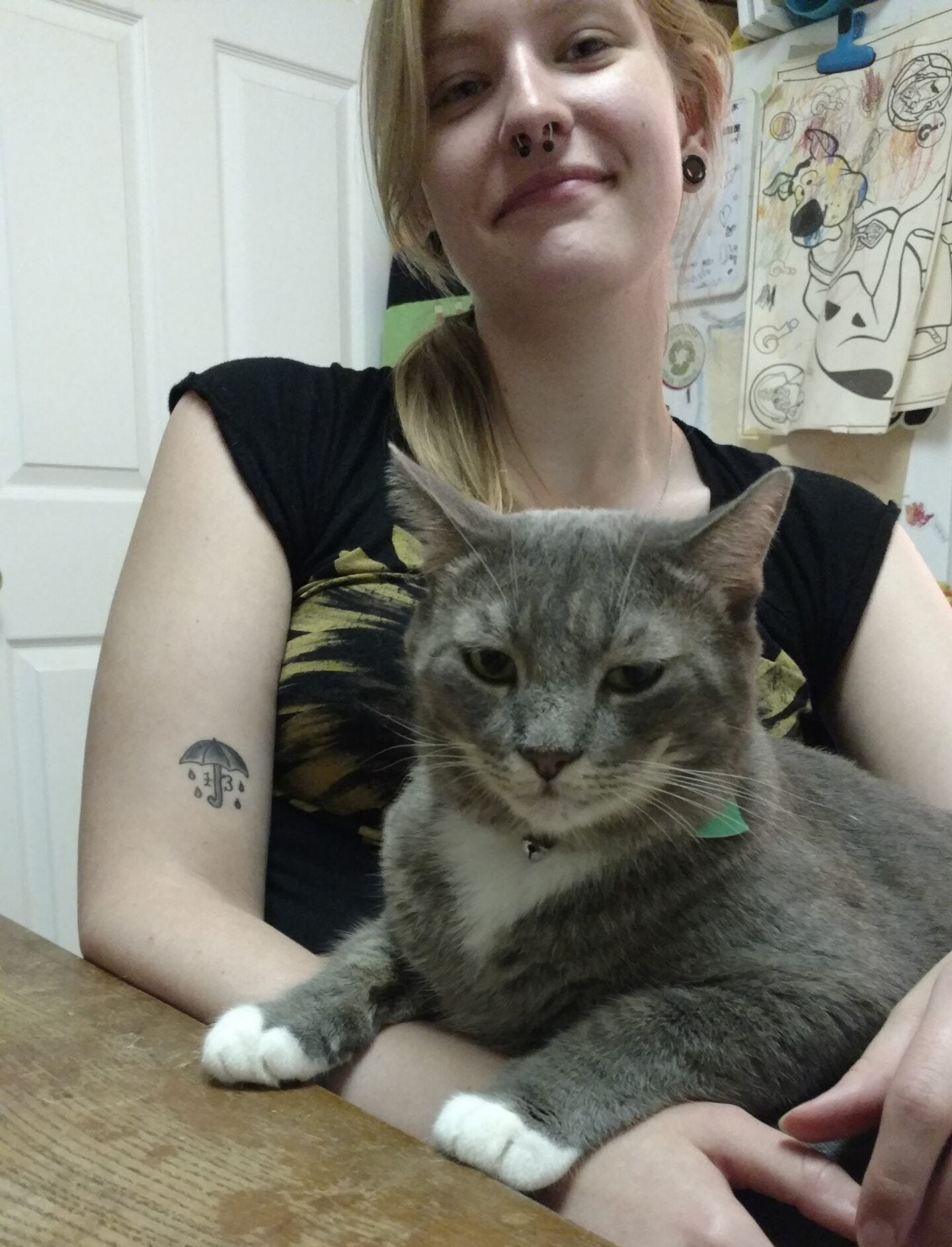
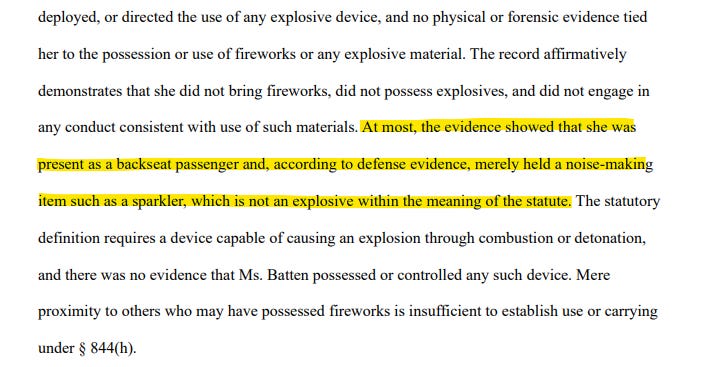
Savannah Batten has been vegan since the age of 14. They collect and care for hermit crabs, and love their cat Garfielda.4 One time on the 4th of July they held a sparkler in someone’s back seat in a manner which federal prosecutors determined was a crime against the State. This earned them 50 years in federal prison.

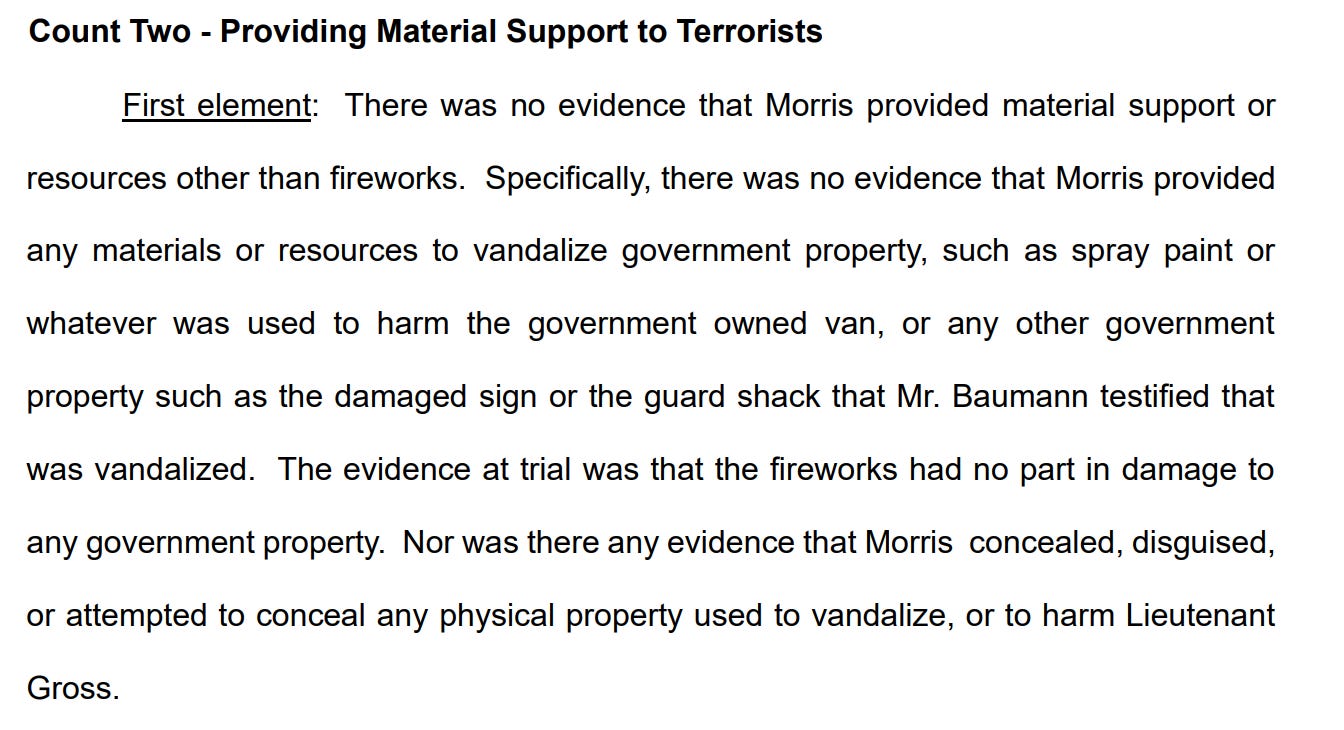
One time Meagan Morris legally purchased some fireworks in Texas and then sat in her car a half-mile from a protest in which those fireworks were safely shot off near an ICE facility to support detainees playing on her Nintendo Switch. She is now facing 50 years in prison.

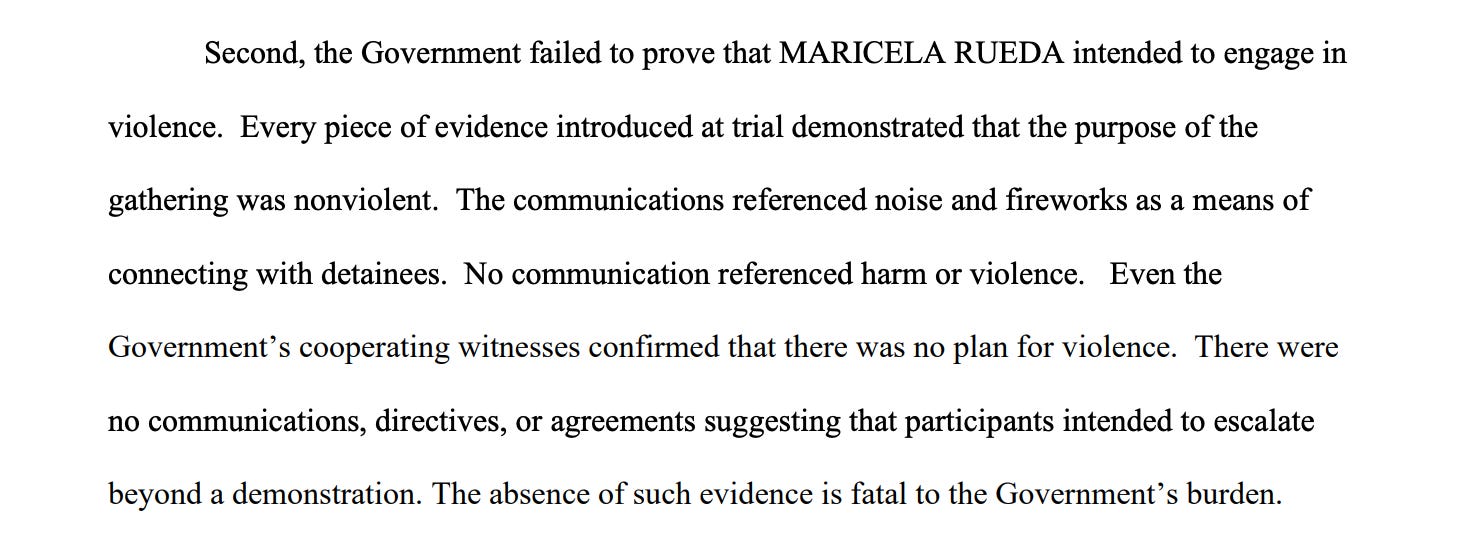
Maricela Rueda is a dedicated mother to a 13-year-old child and practicing vegan. As with the other defendants, every single government witness with any knowledge of the plans for this protest confirmed that this was always intended as a non-violent event solely to show support for the detainees inside. She is now facing 70 years in prison for attending the July 5, 2025 noise demonstration.
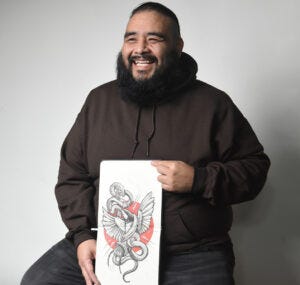
Maricela’s partner Daniel “Des” Sanchez Estrada is an artist who loves animals. One time Des moved some boxes of zines and pamphlets which included such radical messages as a graphic of someone throwing a swastika in the trash and a feminist analysis of the movie Midsomer. He took them to a friend’s house with no further effort to destroy or conceal these First Amendment-protected documents. This earned him 30 years in federal prison.
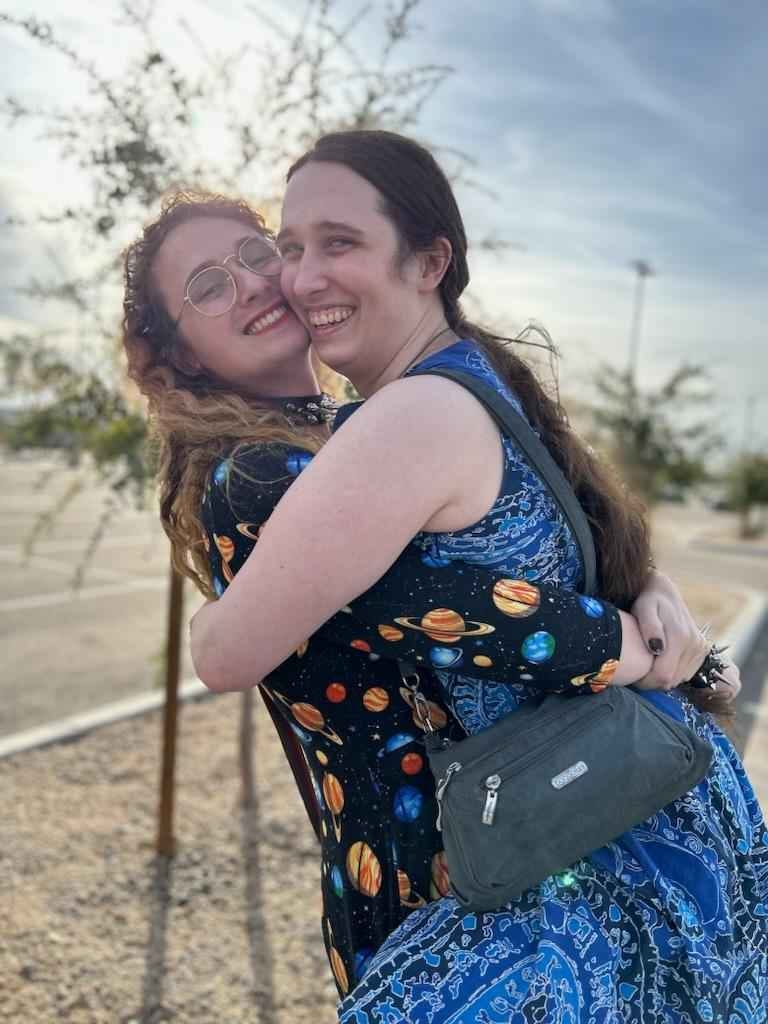
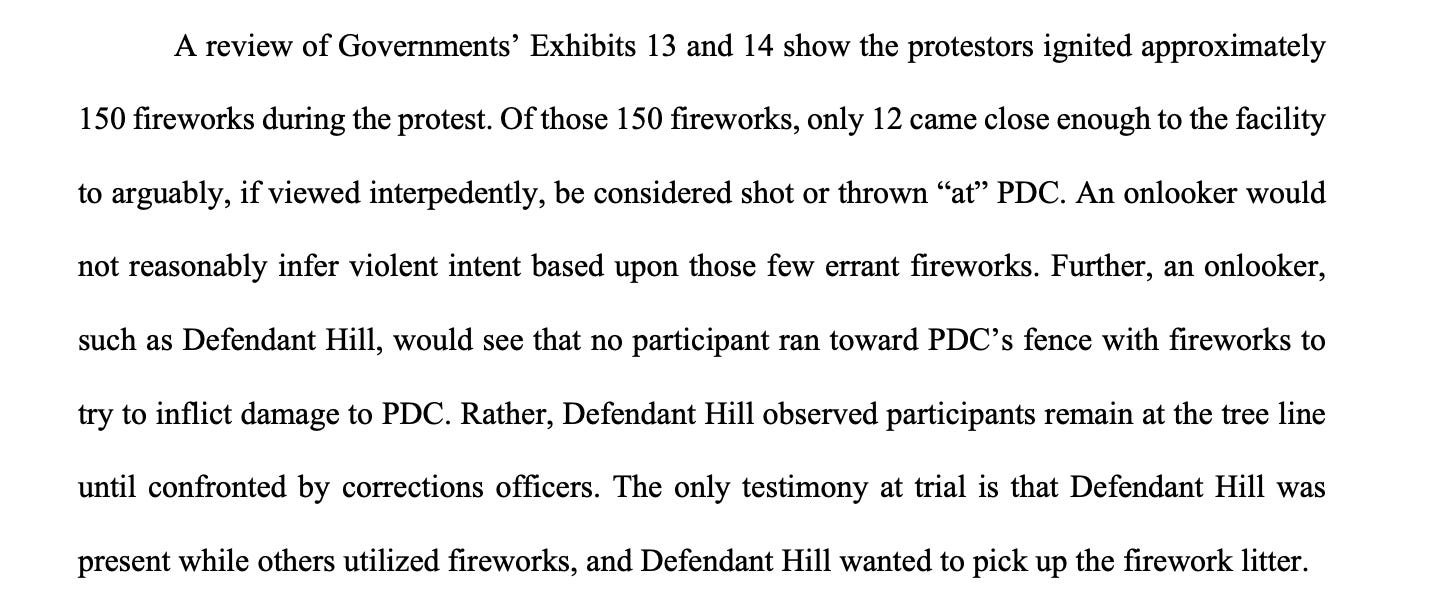
One time Autumn Hill (on the left above) watched some friends set off fireworks on the 4th of July a safe distance from the Prairieland ICE detention center to show support for the detainees inside. She then wanted to clean up some of the debris from the fireworks for the same kinds of basic ethical and environmental reasons that anyone reading this would clean up their own litter. She is now facing 50 years in federal prison.
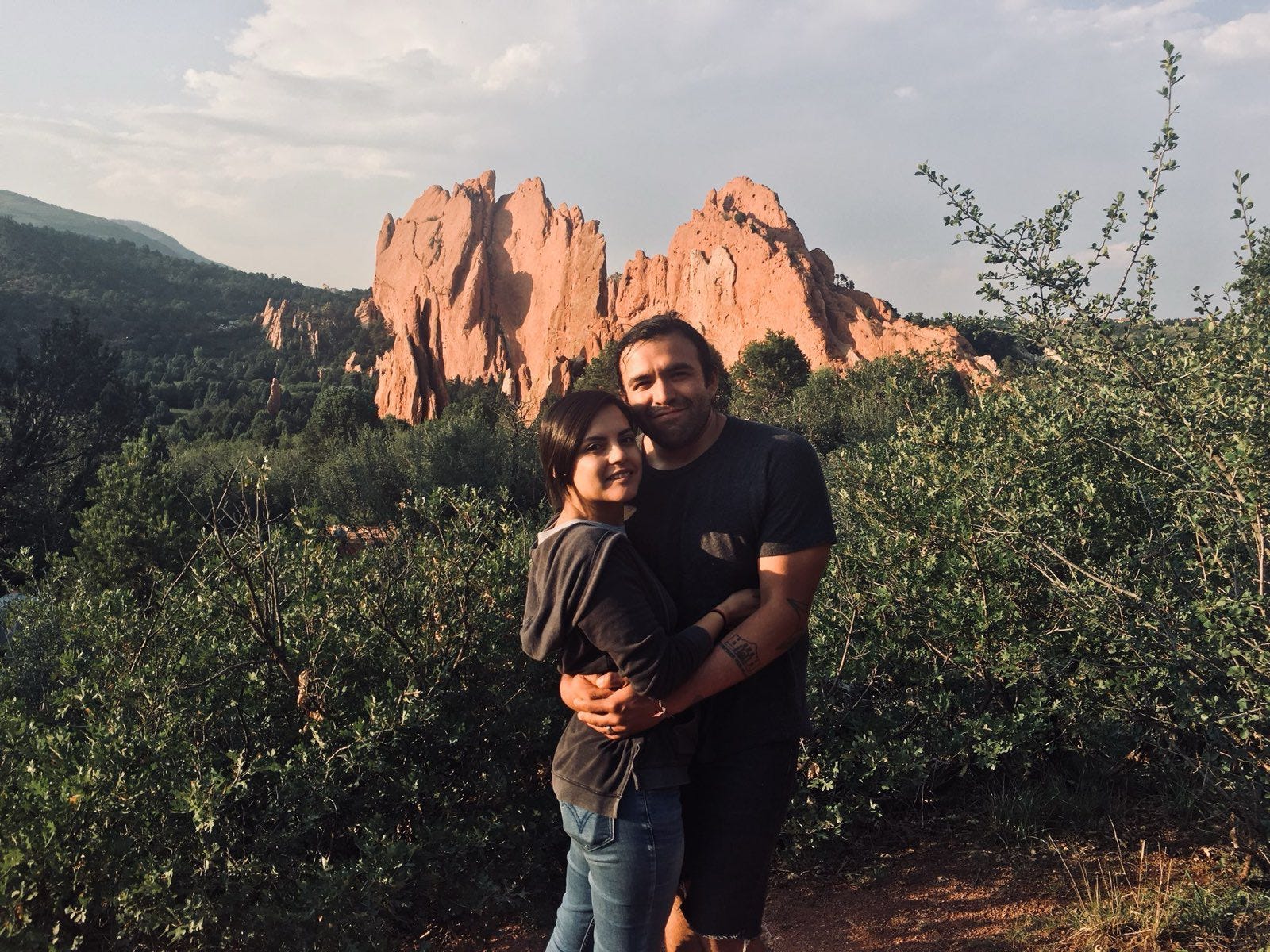
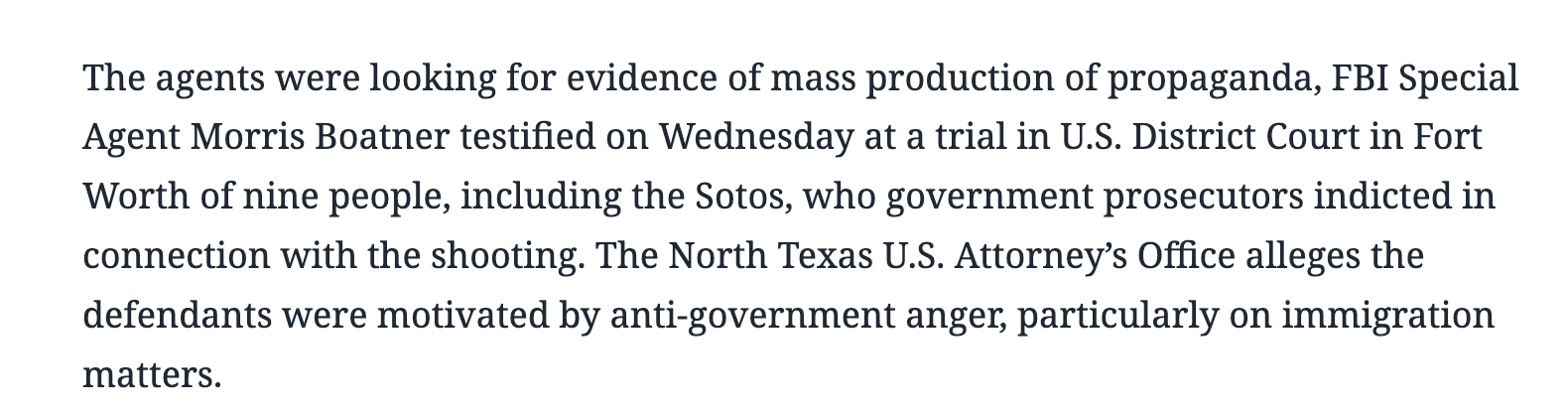
Elizabeth Soto is a mother of three children who was doing one of the most classically American things that anyone can do: publishing First Amendment-protected zines, pamphlets, and other literature out of her home with her partner Ines Soto (both pictured above). The Department of Justice expressed concern about the “anti-government anger, particularly on immigration matters” found in these publications, with no allegation of violent or terroristic rhetoric in any of them.
Elizabeth has just been condemned to 50 years in federal prison; Ines will be sentenced on July 1st.
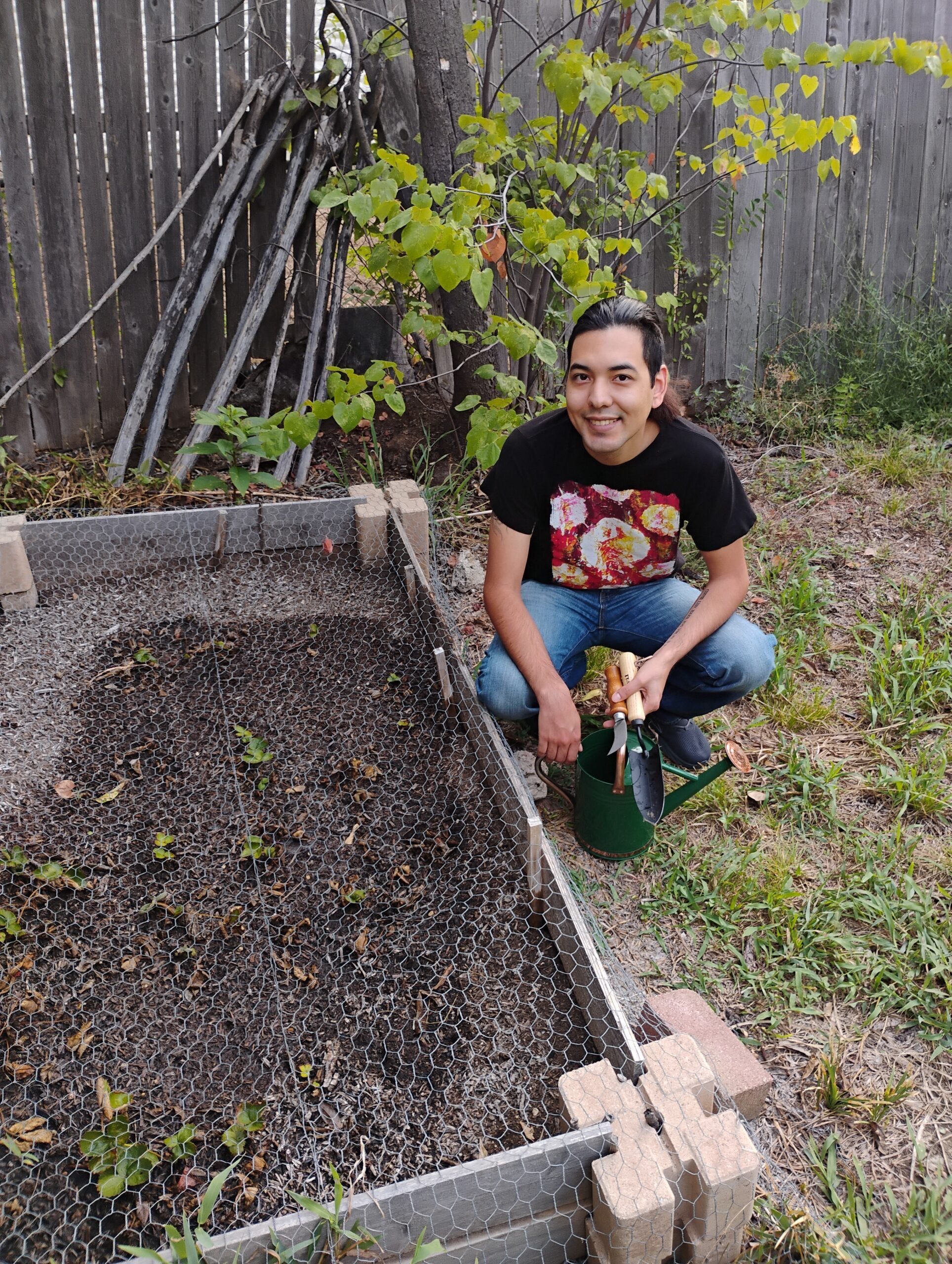
Dario Sanchez deleted someone who was not at the July 5, 2025 noise protest from a Signal group chat. He is now facing unresolved Texas state charges for this which could carry several decades in prison.
These are only a few of the Prairieland stories. I encourage you to take the time to get to know them all on the defense committee’s website, but whenever you hear anyone talking about “Prairieland” as an abstract concept I hope that you will see these faces and remember their names.
This is a lot. It’s been a lot. Let’s take a break and talk about Nina Simone.
INTERLUDE: “AND I MEAN EVERY WORD OF IT”
“The name of this tune is ‘Mississippi Goddam’—and I mean every word of it.”
—Nina Simone introducing the Carnegie Hall premiere of “Mississippi Goddam” (March 21, 1964)
“Bet you thought I was kidding, didn’t you?”
—Nina Simone, to the same audience exactly two minutes and thirty five seconds later
All you really need to know about Nina Simone’s “Mississippi Goddam [sic]”5 to understand it is that (1) it was written within moments of her hearing the news of an act of racial terror which killed four young Black girls in a church in Birmingham, Alabama and (2) she was actively trying to build a gun to shoot the first white person she saw out of pure rage when her husband gently suggested that she write a song instead.
Simone premiered one of the angriest songs of the American civil rights movement at Carnegie Hall for an almost entirely white audience six months later, laundering her fury through the familiar format of what she called in a spoken ad lib after the first verse “a showtune for a show that hasn’t been written yet.”6
From its opening vamp “Mississippi Goddam” does sound like a cheerful Broadway number, but there is a not-quite-rightness about it from the jump: while technically in G major, the song is built around a G6 chord which can feel aurally indistinguishable from E minor. The slight spookiness of the implied minor key and the friction of the not-quite-concordant 6th against the calm of the simple I & V bass notes that Simone is pounding out with her left hand gives the song a steamy simmer which only heats up with every one of Simone’s righteous “godDAMN”s.
Even people who do not read sheet music can feel the visual discomfort in the way that the E is smashed onto these triads.
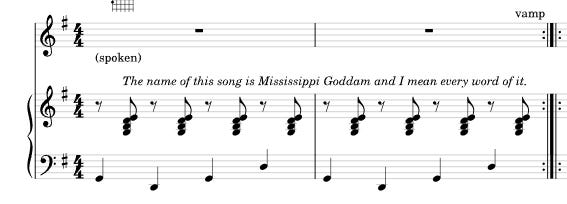
There is no video of the song’s premiere at Carnegie Hall, but here’s a performance of “Mississippi Goddam” on Dutch TV about a year later just so that you can fully appreciate one of the greatest to ever do it:
I had a “Mississippi Goddam” moment for myself on Wednesday evening when I saw that sentences totaling 450 years had been handed down by one of the most infamously partisan judges in the country to 8 of the Prairieland defendants.
PART 2: “An Assault on Democracy”
Prairieland is the first time in U.S. history that terrorism charges have been brought against so-called “Antifa” members. But the “material support” statute doesn’t actually require that you are acting in support of any named group, so long as the intent was there to provide support to one of the listed terror-related crimes.
The government spent plenty of time at trial presenting information about “Antifa,” a thing which does not exist. As anyone who wants to know should know by now, Antifa is a set of tactics, an ideology, a unifying call to community defense in the face of the same tired old fascist organizing strategies which militant rightists have been using to stifle and (literally or otherwise) kill dissent for more than 100 years now.
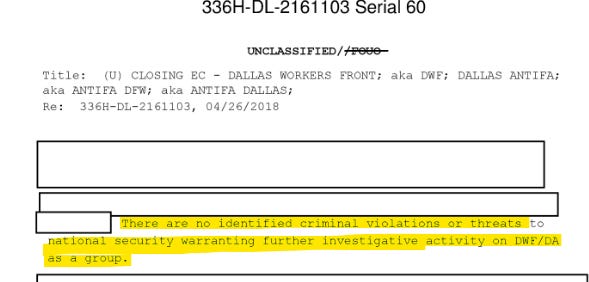
We now know that many of the same people in the Dallas/Fort Worth area were investigated in 2018 and found not to be a threat to public safety or national security. We know this now because we somehow didn't have this information at trial.
In his sentencing remarks, Judge Reed O’Connor alleged without comment that this peaceful protest of an ICE detention center on the country’s 249th birthday was “an assault on democracy.” According to courtroom observers, he also indicated that he would be giving harsher sentences to warn those who shared the defendants’ “ideology.”7
What kind of “ideology” are we talking about here? The now-infamous NPSM-7 memo issued by the White House shortly after the killing of Charlie Kirk spells out the so-called “anti-fascist lie” to a degree which should freeze the blood of anyone who cares about free speech and principled dissent.
Common threads animating this violent conduct include anti-Americanism, anti-capitalism, and anti-Christianity; support for the overthrow of the United States Government; extremism on migration, race, and gender; and hostility towards those who hold traditional American views on family, religion, and morality.
Anti-Americanism. Anti-capitalism. Anti-Christianity. “Extremism” on “migration, race, and gender.” “Hostility” toward Christian cis-hetero family values. We all know what these things actually mean and why they are in this memo, but it is very important to me that you know that they are in this memo.
As defined here, these are all beliefs which would be protected by the First Amendment—or would have been until last week, anyway. Prairieland has proven that these views can and will be used far beyond anything that we have seen in our lifetimes to make domestic terrorists out of peaceful protesters. Anyone who would call this protest an “assault on democracy” has something to learn about assault, not to mention democracy.
I have been closely tracking the criminalization and brutal over-prosecution of people—from elementary school teachers to military veterans to members of Congress—who have been arrested in and around protests against DHS. While the good news is that these cases have nearly all fizzled before trial and ended in acquittal if they got that far, the bad news is everything else that these defendants are put through before justice (and, more to the point, the Department of Justice) is done. The personal and economic immiseration of living under pending federal criminal charges is just as much the point as trying to convict these enemies of the state, if not more so.
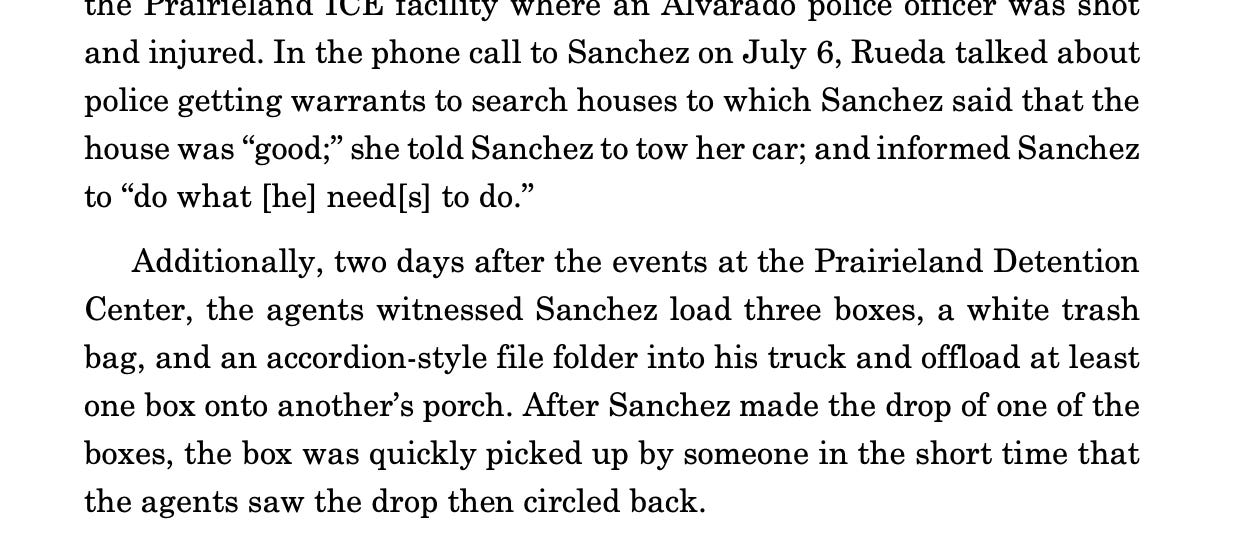
Nearly half a millennium in federal prison for a demonstration in which no one was seriously harmed,8 organized and attended by people whom five of the government’s own witnesses testified under oath personally knew to have nothing but peaceful intentions. These witnesses told the jury that whatever vandalism did occur was spontaneous, and there is no other evidence that it was planned; the gunshots, by all accounts, took the rest of them by surprise and even viewing the screenshots which have been made public in the least favorable way possible they do not suggest any kind of intent to do anything but be prepared for self-defense.
How did we get here?
PART 4: “It will be you tomorrow”
“All of this is bigger than me. I know I am the person standing here. I know I am the person being judged. But I also know that a case like this can become a warning to everyone else: that if you speak, if you protest, if you try to protect someone, if you are associated with the wrong idea, you can be turned into a symbol instead of treated like a human being.
Nothing saddens me more than when I think about all of these different people and their different families and communities, and how they have suffered, and how unfairly they have been treated, just like me.
Whatever is taken from me is taken from you.”
It may be these 22 strangers now, but it will be you tomorrow.”
—Benjamin “Champagne” Song, from his statement at sentencing (6/23/2026)
These prosecutions have really ever been about one thing: aggressively criminalizing dissent, and quickly acclimating us to a new reality in which opinions which would otherwise be protected under the First Amendment are now “terrorism.” This is not hyperbole. And it is all I can think about today.
To reach every member of the group, the prosecution alleged conspiracy and co-conspirator liability under the federal Pinkerton standard in charging each defendant with the independent, unplanned acts of others.

But DOJ also freely employed a rarely-used “domestic terrorism” statute. 18 USC 1339A is carceral rocket fuel, the kind of thing that Congress designed to supercharge even relatively minor conduct to punish defendants with massive sentences if they provide “material support”—not to any particular terror group, but to any effort to commit (or have any involvement in) one of 57 enumerated predicate offenses.
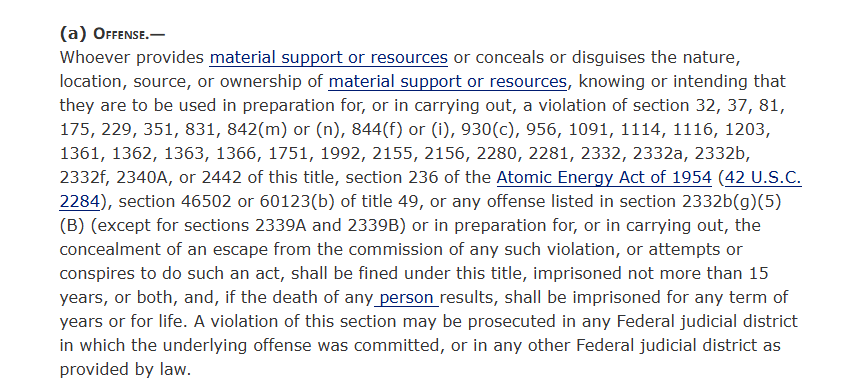
The list of predicates in this case included “depredation of government property” under 18 USC 1361, charged here for some minor vandalism which came out to a relatively low total of restitution amount of $4,408.95. It is entirely accurate to say that less than $5000 in property damage was used to support decades of additional prison time for eight people.
For perspective: Biden’s DOJ repeatedly declined to seek “domestic terrorism” enhancements for the bona fide domestic terrorists of January 6th, 2021. I agreed with this decision then, and still think it was the right call now. As the J6 prosecutions (and every other federal terror-related prosecution which has not invoked 2339A) proved, there is no shortage of other options available to prosecute these kinds of things.9 This statute exists in its current form because of Timothy McVeigh, a man who murdered 168 people (including 19 children) in the course of bombing a federal building. He was never in danger of being undercharged.
Again: “Antifa” is not a group or an organization of any kind, and the “North Texas Antifa Cell” was a total fiction which was created not by the any of the people implicated but by DOJ prosecutors—per Trump’s instructions. For the first time in US history, NPSM-7 purports to allow the federal government to designate “domestic terrorist organizations.” This designation is the third thing in this paragraph which does not actually exist, this time not as a matter of fact but of law.
Congress never created or intended for such a thing—for very good reasons. Trump just made it up.
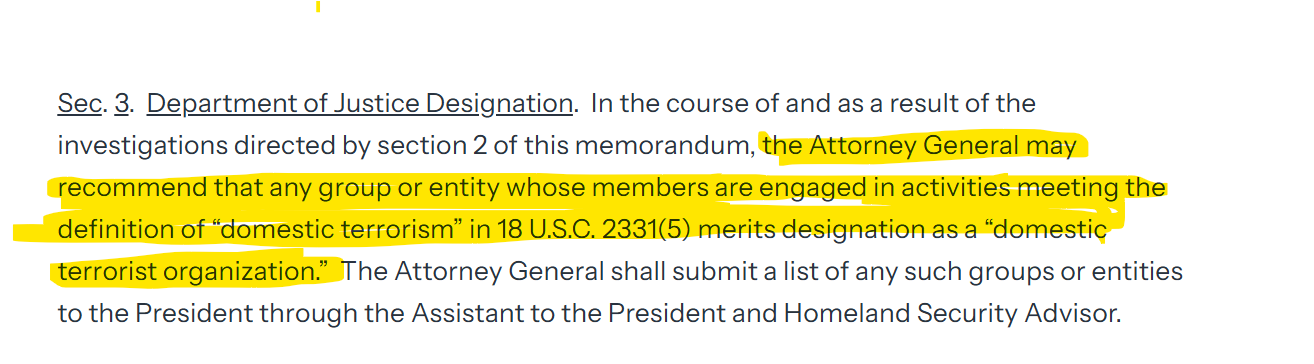
And this was the worst example of “domestic terrorist organization” they could find: a small group of principled people of conscience who organized a chaotic July 4th noise protest on one of the world’s most popular encrypted messaging apps.
Viva the “North Texas Antifa Cell.”
If you oppose the people who are running your government and the policies they are carrying out in your name—or are, in other words, slightly to the left of Jeb Bush—and do not consider yourself to be some kind of radical, NPSM-7 has already decided otherwise. Prairieland proves that this directive not only allows the federal government to designate any given group of friends, organizers, and/or group chat participants a “domestic terrorism organization,” but gives them the roadmap for getting away with it.
A call for radicalization is not a call for violence. It is a demand that we see the world as it is, and that we all agree to put aside the collective pretense that a system which is working well within the parameters of its design is somehow “broken.” The ACLU and other civil rights organizations have consistently warned about the dangers of “domestic terror” statutes, and if you needed proof as to why Prairieland now has everything you need to see it several times over.
Tell these stories, and keep the pressure on until Prairieland pardons are anyone who expects to make it through the next round of Democratic Presidential primaries. Make sure that everyone knows that existing law allows the functional equivalent of life sentences for being in the presence of graffiti or fireworks at an unpopular protest, and get commitments from anyone running for federal office to do their part to eliminate anything resembling “domestic terrorism” from our legal system.
We will win in the end, as we always have--but not simply because we always have. We will win because we must, and because there is no one else to win it for us. Find your anger, and keep its fire close without letting it burn you out.
I am inclined to believe Benjamin Song’s account that (as I understand it) he saw the officer drawing on an unarmed protester who was running away, that he fired a warning shot which richocheted, and that he never meant to hurt anyone.
or, even worse, how—which may need a lot more writing to explain later
Quick editorial note: I am going to use a few photos here to really make my point, all of which will be taken directly from the Prarieland defense committee’s website. I wanted to mention that both because I encourage you to be sure to read and return to the wealth of information you’ll find there, but also because I wanted to be sure that I only used the images that these cruelly immiserated people actually wanted out there of them
Of all of the many heartbreaks in these stories, looking at this picture and realizing that Savanna may never be able to hold her cat again honestly just breaks my heart all the way open. I was going to write something like this into this paragraph, but decided that something so painfully heartwrenching to anyone who has ever loved a domesticated animal was safer as marginalia—and not because it is marginal, but because it is so consequential.
I’ve always assumed that Simone spelled “goddamn” without the N so that it wasn’t technically an obscenity given how much more sensitive society was to that word at that timee, but maybe that was just an accepted alternate spelling? Open to any information anyone might have on this.
Minnesota rapper Brother Ali would later pay tribute to this line (and the song itself) in his 2007 track “Uncle Sam Goddamn,” from which I am copying in my favorite bars verbatim into this footnote:
Talking about how you don’t support a crackhead?
What you think happens to the money from your taxes?
shit the government’s an addict
with a billion dollar a week kill brown people habit
MAGA celebrity Tina Peters recently had her sentence reversed by a Colorado appeals court and subsequently received a pardon from the governor because her sentencing judge made similar statements about her beliefs
One of the many reasons that corporate media has not been following this story as closely as it should have is that a local cop who showed up to the protest was struck by a bullet, allegedly in the neck—but no medical records were ever put into evidence, and it appears from what was brought out at trial that he spent no more than a couple of hours at the hospital, so I feel okay about saying that "no one was seriously harmed.”
These cases also proved beyond any argument that “domestic terror” is in the eye of the governmental beholder. No matter how much effort and evidence is put into something as serious as prosecuting people who were literally invading the heart of the US government in a coordinated effort to stop a democratic election, the people behind that effort can always change the script and undo all of it as soon as they have the power.
I really did not want to read this, but I am thankful that you wrote it.